
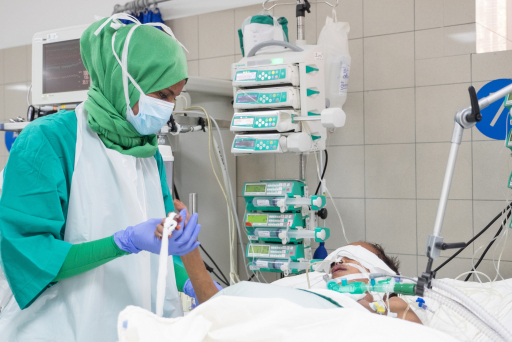
“Se condividiamo tutti gli stessi principi e le stesse idee, potremo dimostrare al mondo che la #medicina d’eccellenza in #Africa è praticabile, sostenibile, riproducibile e, più di ogni altra cosa, auspicabile” @rossmiccio #ANME pic.twitter.com/iDRkQqLzGh
— EMERGENCY (@emergency_ong) February 1, 2023
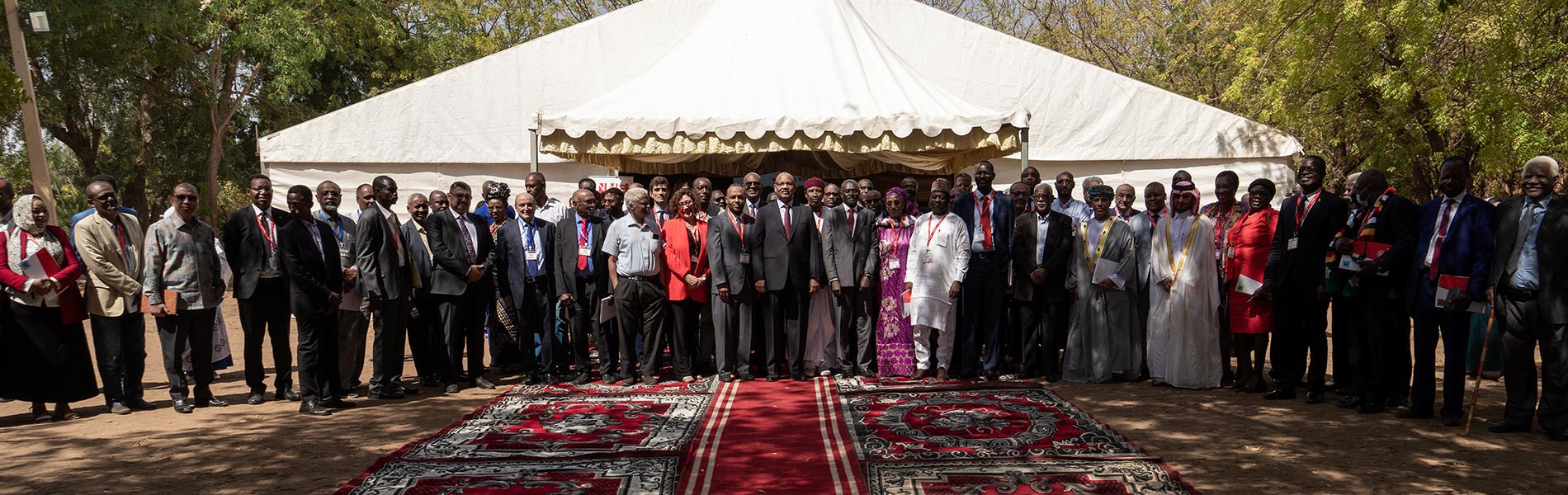
L’1 e il 2 febbraio 2023, i rappresentanti di 15 nazioni africane si sono riuniti insieme a EMERGENCY in Sudan, per definire il futuro dell’ANME, la Rete sanitaria di eccellenza in Africa.
All’incontro “ANME, Moving forward“, organizzato da EMERGENCY e dal ministero della Salute del Sudan a Khartoum, hanno partecipato Burundi, Ciad, Gibuti, Egitto, Eritrea, Etiopia, Niger, Nigeria, Repubblica Centrafricana, Repubblica Democratica del Congo, Somalia, Sud Sudan, Sudan, Uganda, Zimbabwe, oltre ai rappresentanti del College of Anaesthesiologists of East, Central and Southern Africa (CANECSA), del College of Anaesthesiologists of East, Central and Southern Africa (COSESCA) e dell’African Union and the Pan-African Society of Cardiology (PASCAR).
Insieme, abbiamo definito i prossimi passi per la costruzione di una rete di medicina di eccellenza e di formazione specialistica di alto livello in Africa, basata sui principi di Eguaglianza, Qualità, Responsabilità sociale.
ANME, un progetto visionario
La dichiarazione congiunta
Alla fine dell’incontro, i partecipanti hanno firmato una dichiarazione congiunta per condividere l’impegno comune verso il raggiungimento degli obiettivi dell’ANME. Tra questi:
- rafforzare la cooperazione sanitaria regionale tra gli Stati partecipanti;
- facilitare l’individuazione, il trasferimento, il follow-up dei pazienti nei diversi Paesi;
- promuovere la formazione specialistica a livello regionale, per rafforzare le competenze e facilitare la condivisione delle conoscenze;
- promuovere il modello ANME presso le istituzioni nazionali, sovranazionali e regionali.
Khartoum Declaration 2023: il testo integrale
Khartoum Declaration 2023
nWe, Ministers of Health and representatives of the Health Authorities of: Burundi, Central African Republic, Chad, Djibouti, Democratic Republic of the Congo, Egypt, Eritrea, Ethiopia, Niger, Nigeria, Somalia, South Sudan, Sudan, Uganda, Zimbabwe, attending the international workshop u201cANME, Moving Forwardu201d held at the Salam Centre for Cardiac Surgery. The event is jointly organized by the Republic of the Sudan Ministry of Health, the Republic of the Sudan Ministry for Foreign Affairs and the international NGO EMERGENCY.
nBearing in mind that strengthening national health systems in middle- and low-income countries is a commonly recognised critical factor in striving to achieve the Sustainable Development Goals (SDGs);
nUnderstanding that Universal Health Coverage will be achieved only when access to safe, timely, affordable and equitable health services will be improved;
nReaffirming the principle that healthcare is a fundamental right of every individual, as stated in the Universal Declaration of Human Rights;
nRecalling the principles of Equality, Quality and Social Responsibility stated in the Manifesto for a Human Rights-Based Medicine, calling for the delivery of high-quality and free of charge healthcare for all;
nRecognizing the lack of facilities that can provide specialized free of charge treatment in our countries;
nAppreciating that several diseases require access to long-term care to improve the outcome and their quality of life;
nDrawing the attention that Non Communicable Diseases (NCDs), represent an emerging global health threat and are on the rise in Africa;
nStrongly convinced that a patient-centred approach will improve the patientu2019s care and quality of life;
nUnderlining the importance of developing future generations of health workforce to address the main epidemiological conditions in the African region, thus strengthening health systems and mitigating brain drain;
nHighlighting the fundamental role that Centres of Medical Excellence can have in guaranteeing specialized training;
nRecognising the pivotal role of scientific and professional exchange to strengthen healthcare systems and research;
nConsidering the crucial role of regional cooperation to ensure proper access to specialised care, knowledge sharing, and promote the circulation of human resources;
nUnderstanding that the highest political endorsement will be needed to strengthen ANME;
nFully aware that adequate recognition and endorsement from international and regional stakeholders will be necessary for the growth of ANME;
nEmphasizing that investing in healthcare is a main contribution towards Countries development and economic growth;
nStressing the importance of finding feasible financial instruments that will enable resources mobilization to guarantee an adequate funding;
Considering the experiences of the Salam Centre for Cardiac Surgery in Sudan and the Childrenu2019s Surgical Hospital in Uganda as an example that this model can be feasible, sustainable and replicable;
nWe hereby, commit to:
n1. Improve regional cooperation amongst ANME countries and partners to guarantee prevention, early diagnosis, timely treatment and adequate continuity of care;
n2. Guarantee support for patientsu2019 selection, movement and follow up in their home Country;
n3. Foster the relations amongst ANME countries, regional training institutions and EMERGENCY in order to strengthen the training component and facilitate the sharing of knowledge;
n4. Establish a collaborative research infrastructure including an IT platform to address health systemu2019s issues relevant for the ANME Countries;
n5. Gain the highest and broadest political endorsement in order to promote the ANME model inside our own countries;
n6. Appoint a focal point that will be in charge to represent our own Countries within the Network;
n7. Jointly advocate to promote the ANME model within the international community, especially towards regional bodies such as the African Union and the European Union;
n8. Identify the most adequate tools that will provide sustainable financing for the network in the short-, medium- and long term;
n9. Create and participate in a Coordination Mechanism that will provide guidance and improve the effectiveness of ANME implementation and planning;
n10. To fully support and participate to ANME joint activities, meetings and conferences.
nDated Thursday 2nd February 2023. Khartoum, Sudan.
nMinisters of Health and representatives of Health Authorities of:
nChad: H.E Dr. Abdelrahim Mahamat Abdelmadjid
nSomalia: H.E Dr. Ali Hajiadam Abubakar
nSudan: H.E Dr. Heitham Mohammed Ibrahim Awadalla
nZimbabwe H.E Dr. Amon Murwira
nUganda: H.E Anifa Kawooya Bangirana
nBurundi: Dr. Olivier Nijimbere
nCentral African Republic: Dr. John Francis Onambele
nDjibouti: Dr. Sahra Moussa Bouh
nDemocratic Republic of the Congo: Dr. Jules Biselenge Katusi
nEgypt: Dr. Amer Samieh
nEritrea: Dr. Yohannes Teclegiorgis Tewelde
nEthiopia: Dr. Daniel Gebremichael Burssa
nNiger: Mme. Aissa Hamma
nNigeria: Dr. Mukhtar Yawale Muhammad
nSouth Sudan: Dr. Janet Kemisa Michael
Il video messaggio del Direttore generale dell’OMS
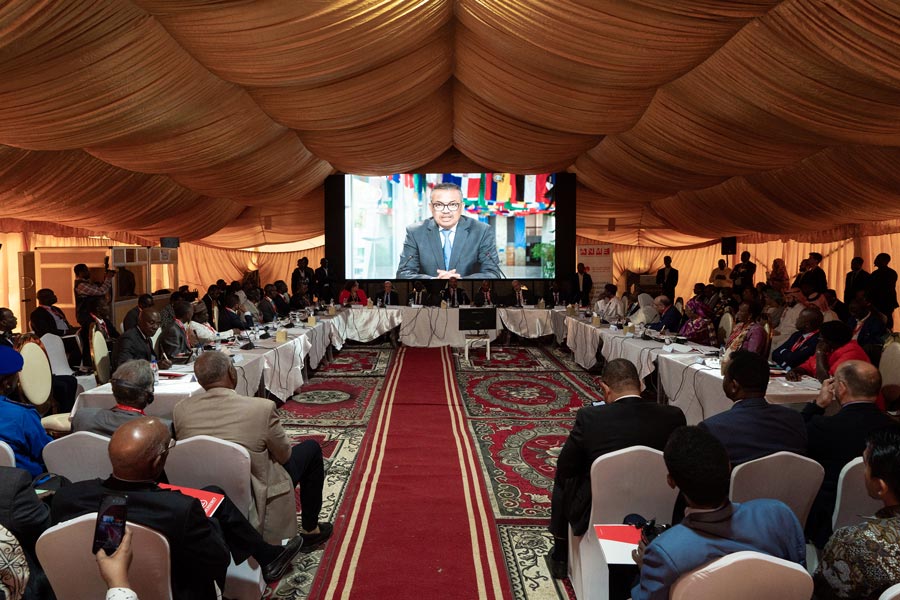
Nel corso della prima giornata dell’incontro, che si è svolta presso il Centro Salam di cardiochirurgia di EMERGENCY, il dottor Tedros Adhanom Ghebreyesus, Direttore generale dell’Organizzazione mondiale della sanità (WHO, World Health Organization), ha inviato un videomessaggio rivolto ai partecipanti:
“Vi esorto a condividere quanto questo progetto vi ha insegnato. Lavorando insieme possiamo accelerare l’accesso a cure tempestive, sicure, di alta qualità e realizzare la visione di un mondo più sano, sicuro, giusto per tutti”.
La Rete ANME
Nel 2007, con il Centro Salam di cardiochirurgia a Khartoum in Sudan, abbiamo avviato un progetto di cooperazione sanitaria innovativo per portare sanità di eccellenza in Africa e affermare così, nella pratica, il diritto a ricevere cure gratuite e di elevata qualità di ogni essere umano.
Il Centro Salam e il Centro di chirurgia pediatrica a Entebbe, in Uganda, che offrono cure specialistiche gratuite rivolte agli abitanti dell’intero continente africano, sono i primi due esempi di realizzazione concreta dell’ANME.
Il modello ANME
La gratuità e l’eccellenza della cura sono i fondamenti del modello di assistenza sanitaria che i membri dell’ANME intendono realizzare nei loro Paesi.
La gratuità è il prerequisito essenziale affinché tutti possano accedere tempestivamente alle cure di cui hanno bisogno.
L’eccellenza garantisce alti standard clinici dei singoli interventi e promuove la formazione di personale sanitario qualificato, lo sviluppo della ricerca e dei sistemi sanitari locali.